
News · School of Listening — 22 September 2026
Learn more about the School of Listening
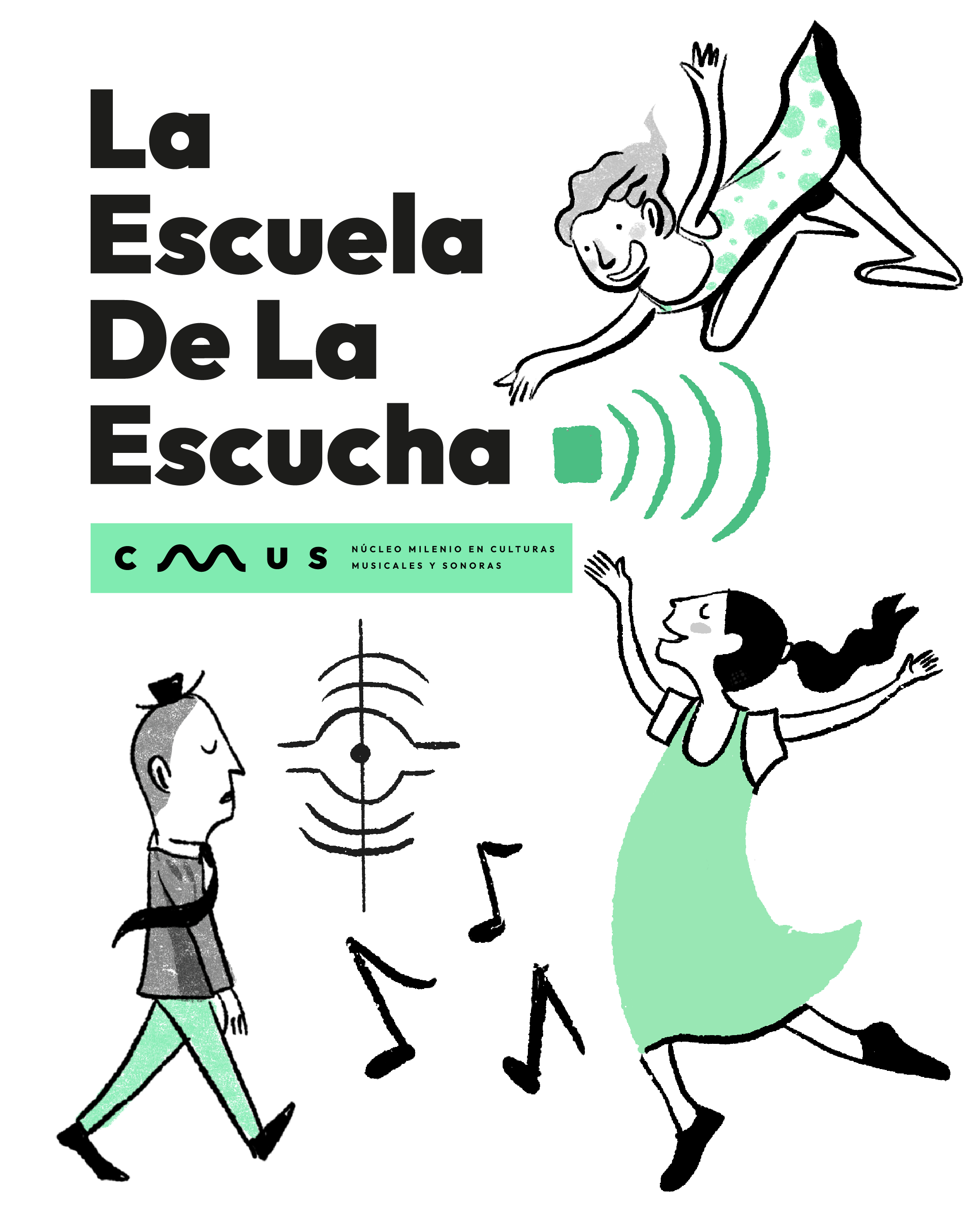
The School of Listening is an experimental pedagogical initiative led by the Millennium Nucleus on Musical and Sound Cultures (CMUS), which seeks to produce and transfer social research methodologies based on sound, music, and listening to educational communities. The project has been funded on two occasions through ANID's Outreach Program (PME) line, via the applications La Escuela de la Escucha I y II: Elaboración de materiales pedagógicos, material docente y capacitación and La Escuela de la Escucha III: Ampliando Horizontes Sonoros en la Educación.
Critically listening to one's own environment
Among its main objectives, the School of Listening seeks to foster, within educational communities, an interest in and the skills for critically listening to and valuing their local sound worlds. It also aims to transfer methodologies of sonic and aural exploration to high school students, enabling them to identify, record, analyze, and experiment with their social environments, while building local actors' capacities for sound experimentation and knowledge dissemination.
Three thematic strands for thinking about territory
Each implementation of the School of Listening is organized around a predefined thematic strand, based on the characteristics and situations each educational community is experiencing. The proposed strands are: environment and territory; migration and citizenship; and culture and gender relations.
Materials for the classroom
For its implementation in schools, the School of Listening relies on two educational resources: a teacher's manual and a student workbook, tools designed to guide the process of critical listening and sound experimentation both inside and outside the classroom.
Learn more about the School of Listening in our special section of the website.